
Important Document Storage Guide: Secure Your Files in 2026

Imagine facing a critical audit in 2026, only to realise you cannot access the documents needed to protect your finances or reputation. As digital threats grow and regulations tighten, important document storage has become a priority for every household and business.
This guide delivers a step-by-step approach to important document storage, including why it matters, the latest risks, physical versus digital options, security best practices, and future-proofing strategies. Discover how to safeguard your most valuable information with expert advice designed for today's evolving landscape.
Understanding the Importance of Document Storage in 2026
Imagine the stress of searching for crucial records during an emergency, only to discover they've been compromised or lost. In 2026, important document storage is facing more challenges than ever before. Cybercrime is on the rise, with a 20% increase in ransomware attacks reported in 2025. Physical risks like fire, flood, and theft still put paper records in danger. Regulatory changes, especially in Australia, now demand higher standards for privacy and data retention. Recent high-profile data leaks have shown the real-world consequences of poor storage. For more insight into the growing risks, review the latest cybercrime victimisation statistics in Australia.
Evolving Risks and Threats
The variety of documents requiring secure storage continues to grow. Personal records such as birth certificates, passports, wills, and insurance policies remain essential. For businesses, contracts, tax records, employee files, and intellectual property must be protected. Digital assets now include passwords, cryptocurrency keys, and cloud credentials. All these items demand a thoughtful approach to important document storage.
Types of Important Documents
When document storage is neglected, the consequences can be severe. Identity theft and financial loss are common outcomes of lost or stolen documents. Legal penalties may follow lapses in regulatory compliance, leading to business disruption. There have been real-life instances where families and companies suffered hardship due to poor important document storage practices.
Consequences of Poor Storage
Several trends are shaping how people approach important document storage in 2026. Hybrid work and remote access have made cloud services a necessity for many. Digital IDs and e-signature documents are now widely used, adding new types of records to manage. The reliance on digital solutions also brings new vulnerabilities.
Trends Shaping Document Storage
Organising your important document storage pays off quickly. Fast retrieval saves time and reduces stress, especially during audits or emergencies. Compliance with regulations is easier when records are properly maintained. According to AIIM, 30% of small businesses say lost documents are a major productivity drain.
The Value of Organised Storage
Costs associated with poor important document storage can add up fast. Direct costs include replacing documents and paying legal fees. Indirect costs, such as downtime and reputational damage, may be even higher. Investing in secure, well-organised storage is a smart way to protect your assets and your peace of mind.
Choosing Between Physical and Digital Storage Solutions
Choosing the right approach for important document storage is a critical decision in 2026. With threats on the rise and regulations tightening, selecting between physical and digital storage— or a combination— can shape your security, compliance, and peace of mind.

Pros and Cons of Physical Storage
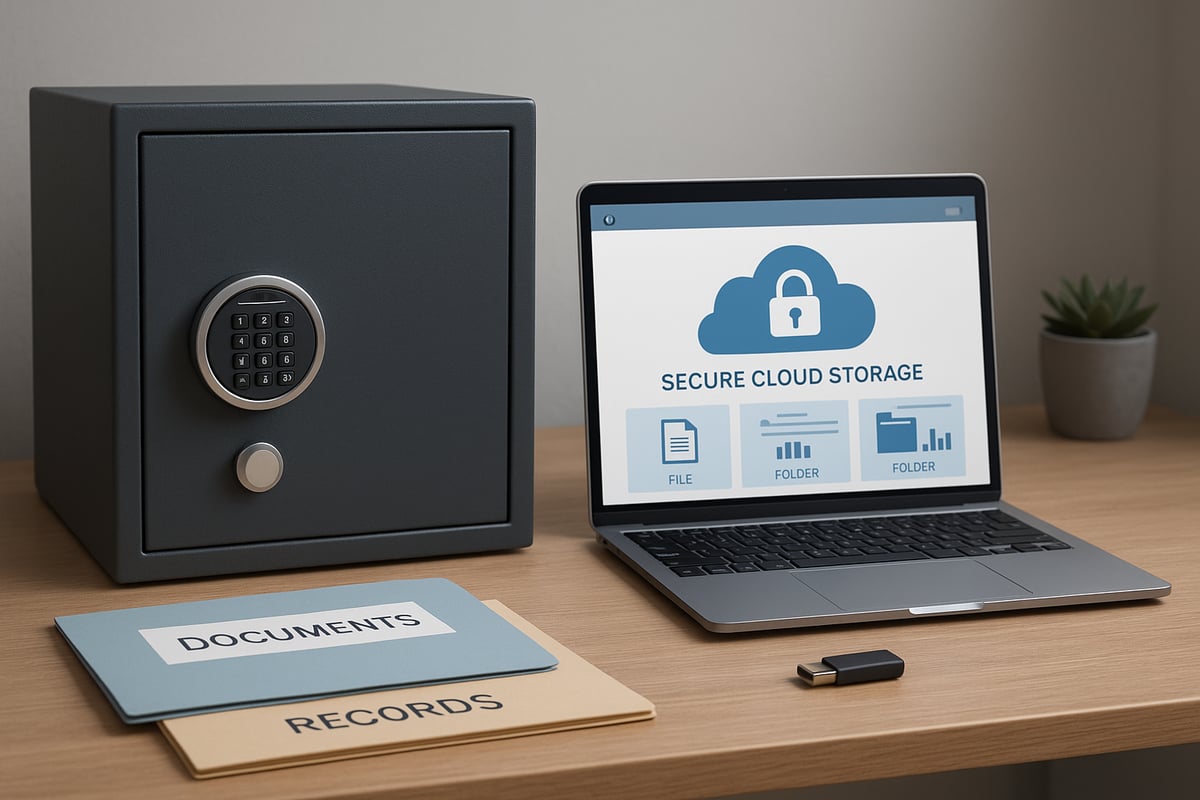
Physical storage remains a trusted option for important document storage, especially for original documents like birth certificates and property deeds. These items often require the original copy for legal recognition. Physical storage is immune to cyber threats, making it reliable in the face of hacking or ransomware.
However, paper documents are still vulnerable to fire, water, and theft. To minimise risks, use fireproof and waterproof safes, place items in acid-free folders, and store them above ground in secure areas. For best-practice preservation, consult resources like the Preserving your own archive guidelines for storing personal records and photographs. Limited accessibility is another factor, as physical access is required for retrieval.
Pros and Cons of Digital Storage
Digital storage has become an essential part of important document storage strategies. It offers convenience, scalability, and remote access from any device— ideal for hybrid work or families spread across locations. Leading cloud services like Google Drive and Dropbox provide secure, encrypted storage with easy backup options.
Yet, digital files are susceptible to hacking, ransomware, and accidental deletion. To safeguard your documents, always use reputable providers, enable strong passwords, and activate two-factor authentication. Encryption is non-negotiable for sensitive documents. Regularly update security settings and back up your files to prevent data loss.
Hybrid Storage Approaches
Many Australians are adopting a hybrid model for important document storage, combining the strengths of both physical and digital solutions. For example, keep original paper wills and property deeds in a safe, while maintaining digital scans for everyday reference.
This approach offers redundancy and flexibility. If disaster strikes one storage method, you have a backup in another format. Businesses often use encrypted cloud backups alongside fireproof safes to ensure business continuity. For individuals, this means peace of mind— your most valuable documents are protected against a wider range of risks.
Evaluating Your Needs
To optimise important document storage, assess the types of documents you have and how often you need to access them. Legal and financial records may require original copies, while other files can be stored digitally. Consider regulatory requirements, especially if you manage sensitive or confidential information.
Tailor your system based on your situation— whether you are a homeowner, a business owner, or have specialised needs like medical or legal documents. Budget, storage space, and compliance should all factor into your decision. A thoughtful evaluation ensures your documents are both secure and accessible when needed.
Cost Comparison
Understanding the costs involved in important document storage helps you make informed decisions. Below is a summary comparing typical expenses:
| Solution | Upfront Costs | Ongoing Costs | Pros | Cons |
|---|---|---|---|---|
| Physical Storage | Safe ($200–$800), archival materials ($50+) | Minimal (maintenance) | Reliable, legal originals | Vulnerable to fire, theft |
| Digital Storage | Computer, scanner ($100–$500) | Cloud subscription ($5–$20/month) | Scalable, remote access | Cyber risks, subscriptions |
| Hybrid Approach | Combined above | Combined above | Redundancy, flexibility | Higher total investment |
Investing in secure important document storage pays off by reducing risk, improving compliance, and saving time during audits or emergencies.
Step-by-Step Guide: How to Store Your Important Documents Securely in 2026
Protecting your information goes beyond simply putting papers in a drawer or uploading files to the cloud. The following step-by-step approach is designed to help you achieve robust, important document storage that stands up to modern risks and future needs.
Step 1: Inventory and Categorise Your Documents
Begin your important document storage journey by creating a thorough inventory. Make a checklist of all critical documents, such as birth certificates, passports, wills, insurance policies, property deeds, tax records, and digital asset credentials.
Divide your documents into categories: personal, financial, legal, and digital. Note which documents you access frequently and which are only needed in specific situations. This organisation not only reduces stress but also ensures nothing is overlooked when you need it most.
- Use a spreadsheet or dedicated document management app for your inventory
- Include document type, location, and renewal dates
- Identify documents unique to your household or business
A well-categorised inventory forms the foundation of secure, important document storage.
Step 2: Decide What to Store Physically vs Digitally
Not all documents are best kept in the same format. Evaluate which documents require original, physical copies for legal or regulatory reasons, such as birth certificates or property deeds. For others, high-quality digital scans can be just as effective.
Assess the legal acceptability of digital versions in Australia, especially for contracts and official records. Digitise documents where possible, ensuring scans are legible and complete. This approach offers flexibility and redundancy, a key principle in important document storage.
- Originals: Store birth certificates, wills, and deeds physically
- Digital: Scan and store tax records, insurance policies, and reference materials
- Regularly review regulations to ensure compliance
Balancing physical and digital storage helps future-proof your records.
Step 3: Select Secure Physical Storage Solutions
For physical documents, invest in robust protection. Choose fireproof and waterproof safes, lockable filing cabinets, and acid-free folders to preserve originals. Store items above ground level, away from water sources, and in low-risk areas of your property.
For long-term preservation, follow expert guides such as the How to store pedigree papers long-term, which details steps to maintain document integrity over decades. This attention to detail is crucial for important document storage, especially for items with legal or sentimental value.
- Use archival boxes for fragile or irreplaceable papers
- Label folders clearly for quick access
- Regularly inspect for signs of damage or wear
Strong physical storage is a cornerstone of comprehensive protection.
Step 4: Choose and Set Up Digital Storage
Selecting digital solutions requires careful consideration. Opt for reputable cloud providers offering end-to-end encryption, such as Google Drive or Dropbox. Supplement this with local backups on encrypted external drives for an added layer of security.
Implement strong, unique passwords and enable two-factor authentication for all important document storage accounts. Structure digital folders logically, mirroring your physical organisation for consistency.
- Choose providers with Australian data centres for compliance
- Schedule automatic backups to prevent data loss
- Encrypt sensitive files both at rest and in transit
A layered digital approach reduces the risk of unauthorised access or accidental deletion.
Step 5: Back Up and Redundancy Planning
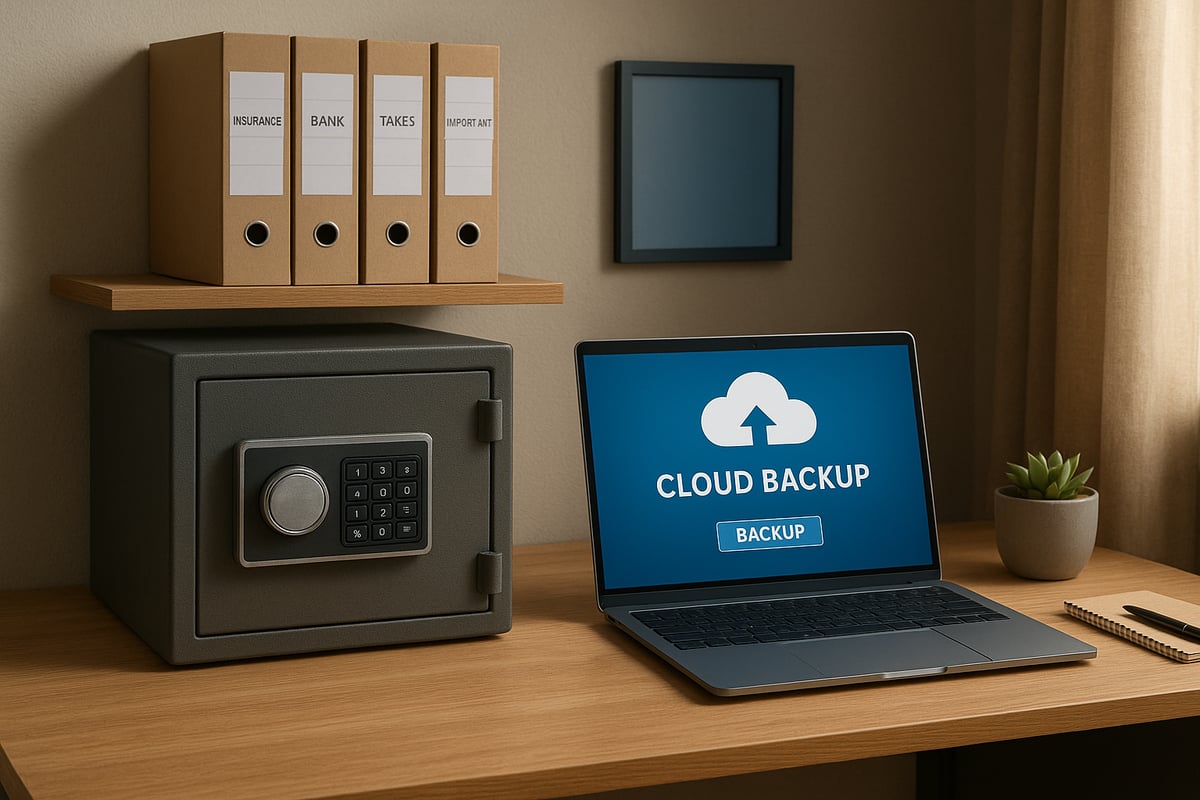
A sound backup strategy is vital. The 3-2-1 rule—three copies, two media types, one offsite—remains the gold standard for important document storage. Use cloud backups for convenience, local drives for speed, and a secure offsite location for disaster recovery.
| Backup Type | Location | Frequency |
|---|---|---|
| Cloud | Offsite | Monthly |
| External HDD | Home/Office | Weekly |
| Physical Copy | Safe Deposit | Annually |
Test your backups regularly to ensure files can be restored. Update backup schedules as your document inventory grows, and consider using dedicated software for automated processes.
Step 6: Organise for Easy Retrieval
Organisation is about more than storage—it is about quick, stress-free access. Develop a clear indexing system for both physical and digital files. Use consistent naming conventions and metadata tags.
For digital files, try a naming system like:
[Year]_[DocumentType]_[Name/Description]
Example: 2026_Passport_JSmith.pdf
Label physical folders and boxes clearly, and keep a master index in a secure but accessible location. Proper organisation is a hallmark of effective important document storage.
- Use colour-coded folders for categories
- Store emergency contacts and access instructions with your records
Step 7: Update and Audit Your Storage Regularly
Review your important document storage annually. Remove outdated or expired documents, replace damaged originals, and refresh digital backups. Audit digital access logs and permissions to ensure only trusted individuals have entry.
Set reminders for renewal dates and periodic audits. This proactive approach keeps your system up-to-date and reduces the risk of loss or non-compliance.
- Update your inventory after major life events or business changes
- Test backup restorations periodically
- Log all access and changes for security
Regular audits make your storage system resilient and reliable.
Step 8: Train Family or Team Members
Your important document storage system is only as strong as the people who use it. Train family members or staff on how to access and manage documents in emergencies. Provide clear, written procedures and store them securely alongside your inventory.
Conduct occasional drills or walkthroughs to ensure everyone is comfortable with the process. This way, your storage plan is not just secure but also actionable when it matters most.
- Share access instructions and emergency contacts
- Assign backup responsibilities for business or group settings
Empowering others safeguards your legacy and ensures business continuity.
Security Best Practices for Document Storage
Protecting your important document storage demands a multi-layered approach. Whether you are safeguarding personal records or sensitive business files, the right mix of physical and digital security will reduce risk and ensure compliance. Let us break down the best practices that matter most in 2026.
Physical Security Measures
Physical security forms the first line of defence for important document storage. Start by installing a fireproof and waterproof safe in a concealed location that only trusted people can access. Position safes and lockable filing cabinets above ground level and away from plumbing to reduce risk of water damage.
Use tamper-evident seals on containers holding sensitive documents. Security cameras near storage areas serve as both deterrent and evidence if a breach occurs. Limit the number of people with physical access and keep a written log of who enters storage areas.
For added protection, invest in acid-free folders and archival boxes. These materials preserve documents against deterioration, ensuring your important document storage stands the test of time.
Digital Security Measures
Digital files are a prime target for cybercrime, so robust security is vital for important document storage. Always use strong, unique passwords and consider a reputable password manager to avoid reuse across accounts. Enable multi-factor authentication (MFA) wherever possible, as studies show businesses using MFA saw a noticeable drop in breaches in 2025.
Keep all software and operating systems updated with the latest patches. This prevents attackers from exploiting known vulnerabilities. Choose cloud providers that offer end-to-end encryption and transparent security protocols.
Unmanaged digital assets can become a major liability. In fact, 60% of Australian organisations experienced security incidents from unmanaged assets, highlighting the importance of oversight in important document storage. Regularly review and update access permissions to ensure only authorised users can reach your files.
Encryption and Data Protection
Encryption is essential for sensitive files in important document storage. Encrypt data both at rest (when stored) and in transit (when transferred). Most reputable cloud storage services offer built-in encryption, but you can also use standalone tools for extra security.
Familiarise yourself with the Australian Privacy Principles and ensure your document management practices comply with local regulations. Legal and financial firms are increasingly adopting end-to-end encryption for client files, setting a gold standard for data protection.
Store encryption keys securely, separate from the documents themselves. Consider using hardware security modules or password-protected vaults for key management. This approach will significantly reduce the risk of unauthorised data access in your important document storage.
Secure Disposal and Shredding
Proper disposal is just as important as storage when it comes to important document storage. Outdated or expired physical documents containing sensitive data should be shredded using a cross-cut shredder. This prevents reconstruction and misuse.
For electronic files, use secure deletion tools that overwrite data multiple times, making it virtually impossible to recover. Simply deleting a file does not guarantee its removal from storage devices.
A good practice is to maintain a regular disposal schedule. Set calendar reminders to review and purge unnecessary files, both physical and digital. This habit keeps your important document storage system lean and less vulnerable to data breaches.
Monitoring and Alerts
Continuous monitoring is crucial for both physical and digital important document storage. Install motion detectors or security cameras near physical storage areas and set up alerts for unauthorised entry attempts.
On the digital side, enable notifications for failed login attempts, new device logins, or changes to file permissions. Regularly review audit logs to spot unusual activity. Document management software often includes built-in monitoring tools that simplify this process.
By staying vigilant and proactive, you can respond quickly to threats before they escalate. Monitoring is a cornerstone of effective important document storage and compliance.
Insurance and Disaster Recovery
Even with robust security, incidents can still occur. That is why insurance is a smart addition to your important document storage strategy. Look for policies that cover both physical and digital losses, especially for high-value records.
Develop a comprehensive disaster recovery plan. This should include steps for restoring files from backups, replacing lost or damaged originals, and notifying relevant authorities in case of a breach. Store a copy of this plan offsite and ensure key personnel are familiar with the procedures.
Regularly test your backup and recovery processes to ensure they work when needed. A well-prepared approach minimises downtime and financial loss, strengthening your important document storage system.
Future-Proofing Your Document Storage Strategy
Adapting your important document storage methods is vital to keep up with the changing landscape. Technology, regulations, and environmental concerns are evolving rapidly, so your strategy should be flexible and ready for the future.
Emerging Technologies and Trends
Staying ahead means embracing emerging technology in important document storage. Blockchain is gaining traction, offering tamper-proof records for sensitive data. Artificial intelligence is transforming document management, automating organisation and retrieval. Biometric authentication, such as fingerprint or facial recognition, is becoming a mainstream security feature. According to Gartner's forecast on security spending in Australia, investment in secure storage and risk management is set to rise sharply. These advances ensure your documents remain protected and accessible as technology evolves.
Legal and Regulatory Changes
Australia’s privacy laws and digital signature regulations are frequently updated. Important document storage must comply with the latest requirements, such as secure retention and proper disposal. Government initiatives, like digital IDs and electronic documents, are streamlining verification processes. Monitoring regulatory changes helps you avoid penalties and ensures your storage practices remain valid. By keeping up with these changes, your strategy stays compliant and ready for the future.
Scalability and Adaptability
An effective important document storage system should grow with your needs. As your personal or business records expand, choose solutions that scale easily. Cloud storage allows you to increase capacity quickly, while modular filing systems accommodate new document types. Planning for future demands avoids expensive overhauls later. Flexibility ensures your storage approach remains practical, whether you’re managing a growing family archive or a business with evolving legal requirements.
Sustainability Considerations
Sustainability is increasingly important in important document storage. Choose eco-friendly folders and archival boxes for physical storage. Opt for digital solutions that use energy-efficient servers or support carbon-neutral initiatives. Reducing paper use by digitising documents not only lowers your environmental impact but also streamlines organisation. Sustainable practices benefit both your operations and the planet, making them a smart long-term choice.
Regular Reviews and Continuous Improvement
Schedule annual reviews of your important document storage strategy to ensure it remains effective. Update your inventory, refresh backups, and adopt new best practices as technologies emerge. Continuous improvement keeps your storage system resilient against new threats and changing needs. Regular audits also help you identify any gaps or inefficiencies, so you can make timely adjustments.
Example Scenarios
In 2025, many businesses faced increased ransomware attacks but those with hybrid storage and robust backups recovered quickly. Families managing multi-generational archives have found success using a mix of secure physical folders and encrypted drives. These real-world examples show that a proactive, flexible approach to important document storage can safeguard your information, no matter what the future brings.
Special Considerations for Sensitive or Niche Documents
When it comes to important document storage, certain types of files require extra attention due to their sensitivity, legal status, or unique value. Whether you are managing legal papers, medical records, pet documents, or digital assets, a tailored approach ensures both security and compliance. Below, we explore special considerations and best practices for these categories.
Storing Legal and Financial Documents
For legal and financial papers, original copies often hold legal weight. Wills, trusts, and notarised contracts should be stored in a fireproof safe or a secure safety deposit box. Tax records and investment documents demand similar protection, both for compliance and peace of mind. When planning your important document storage, check Australian laws to confirm the retention period for financial statements and the acceptability of digital scans. Backup digital copies, but always keep originals when legally required.
- Use acid-free folders to prevent deterioration
- Store in a low-risk, dry location
- Limit access to authorised family or business members
Medical and Health Records
Medical documents, including immunisation histories and health summaries, are highly sensitive. Under Australian law, privacy is paramount. For important document storage of medical files, digital solutions must meet strict encryption and access standards. Consider secure cloud portals for sharing with healthcare providers, and keep a backup on an encrypted external drive. Paper records should be stored in locked cabinets, away from humidity and direct sunlight.
- Encrypt digital records
- Regularly update and audit access permissions
- Shred outdated paper files when no longer needed
Pet Pedigree and Registration Certificates
For breeders and pet owners, pedigree and registration certificates combine legal, sentimental, and financial value. Originals are often required for registration or sale. The best practice includes storing these documents in acid-free folders within a fireproof safe. For added organisation and protection, specialised solutions such as Pedigree certificate storage solutions offer dedicated folders designed for important document storage of pet records.
- Keep digital scans for easy access
- Bundle related documents by pet
- Record microchip and vaccination details together
Protecting Digital-Only Assets
Digital assets such as cryptocurrency keys, digital wallets, and online credentials demand a different strategy. Offline (cold) storage, like hardware wallets or encrypted USB drives, is vital for important document storage in this category. Use reputable password managers for credentials and back up recovery phrases in a secure, physical location. Never store sensitive digital keys only on your computer or cloud without proper encryption.
- Create multiple secure backups
- Store recovery instructions separately
- Regularly update digital asset inventories
International Document Storage Needs
Expats and those with assets in multiple countries face unique challenges. Important document storage for this group may involve multilingual organisation and certified translations. Keep originals and translated versions clearly labelled, and store digital copies in secure, internationally accessible cloud services. Consider legal requirements in each jurisdiction, especially for documents like visas, property deeds, and tax files.
- Maintain a document index by country
- Use folders or tabs for each language
- Backup in both local and cloud storage
Heritage Holders: Sustainable Pet Pedigree Document Storage
Heritage Holders provides eco-friendly solutions specifically for the important document storage of pet pedigree certificates and related documents. Their premium folders are crafted to protect valuable papers from wear and environmental damage. Companion bundles make it easy for breeders and pet owners to organise microchip records, vet certificates, and more. For practical tips on safeguarding your pet’s records, see their Guide to keeping pet documents safe. This approach supports both document security and sustainability.
As you’ve seen, safeguarding your most important documents isn’t just about ticking a box—it’s about protecting your peace of mind and ensuring you can always access what matters most. Whether you’re managing pet pedigree papers, birth certificates, or legal records, the right storage solution makes all the difference for long term security and organisation. If you’re ready to take the next step towards preserving your valuable documents with confidence, you can find the best way to store birth certificates, dog pedigree papers, and important documents long term with premium linen certificate holders from Heritage Holders.
Article written using RankPill.